
Caracas, January 4, 2026
In a bold move, U.S. special forces apprehended Venezuelan President Nicolás Maduro and his wife, Cilia Flores, during a military operation in Caracas. The action, sanctioned by the Trump administration, is aimed at addressing charges of narco-terrorism and drug trafficking. International reactions have been largely negative, with multiple countries condemning the intervention, which has raised concerns over both legality and regional stability. The U.S. aims to govern Venezuela temporarily and take control of its oil infrastructure.
Washington, D.C.
U.S. Forces Capture Venezuelan President Nicolás Maduro in Military Operation
In a significant escalation of U.S. intervention in Venezuela, President Nicolás Maduro and his wife, Cilia Flores, were captured by U.S. special forces during a covert military operation in Caracas on January 3, 2026. The operation, initiated by the Trump administration, aimed to apprehend Maduro on charges of narco-terrorism and drug trafficking. Following their capture, Maduro and Flores were transported to the United States to face federal charges in New York.
Details of the Operation
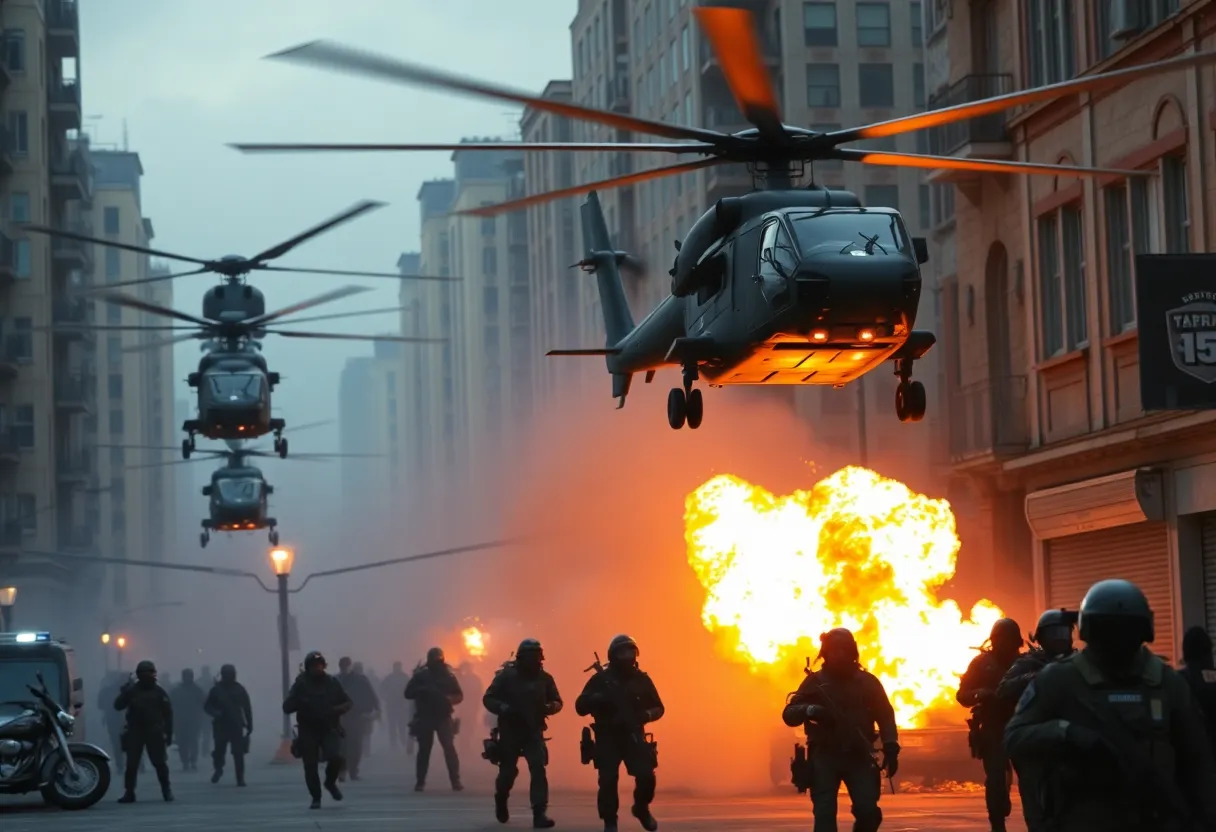
The U.S. military conducted a series of strikes in Caracas, leading to the apprehension of Maduro and his wife. The operation was executed without prior congressional approval, raising questions about its legality under international law. Venezuelan Vice President Delcy Rodríguez confirmed the couple’s disappearance and demanded “proof of life” from the U.S. government.
International Reactions
The U.S. intervention has sparked widespread international condemnation. Brazilian President Luiz Inácio Lula da Silva described the operation as “an unacceptable line,” while Mexico emphasized Latin America’s commitment to peace and warned that the action threatened regional stability. China expressed shock and criticized the U.S. for its blatant use of force. France accused the U.S. of violating international law, insisting that sustainable political change cannot come from external imposition.
U.S. Justification and Future Plans
President Trump defended the operation, stating that the U.S. would temporarily “run” Venezuela until a “proper transition” could take place. He emphasized the necessity of the intervention to ensure a safe and stable political transition in Venezuela. The U.S. also plans to rebuild and control Venezuela’s oil infrastructure, asserting that the industry had been wrongfully taken from the U.S. by the socialist regime.
Background on Nicolás Maduro
Nicolás Maduro, a former unionized bus driver, rose to prominence in Venezuelan politics, serving as president from 2013 until his capture in 2026. His tenure was marked by economic challenges, political unrest, and allegations of authoritarianism. In 2020, the U.S. indicted Maduro on charges of narco-terrorism, offering a $50 million reward for information leading to his arrest.
Impact on Regional Stability
The U.S. military operation has significantly disrupted air travel across the Caribbean, with hundreds of flights canceled due to airspace restrictions imposed over Venezuela. This has affected major airlines and stranded travelers during the holiday season.
The situation remains fluid, with ongoing debates about the legality and implications of the U.S. intervention in Venezuela. The international community continues to monitor developments closely, with concerns about the potential for increased instability in the region.
Frequently Asked Questions (FAQ)
What led to the U.S. military operation in Venezuela?
The U.S. conducted a military operation to capture President Nicolás Maduro and his wife, Cilia Flores, on charges of narco-terrorism and drug trafficking.
How did the international community react to the U.S. intervention?
International reactions were largely negative, with countries like Brazil, Mexico, China, and France condemning the U.S. actions and expressing concerns about regional stability and violations of international law.
What are the implications of the U.S. intervention for Venezuela’s future?
The U.S. plans to temporarily govern Venezuela and control its oil infrastructure, aiming to stabilize the country and facilitate a political transition. However, this intervention has raised questions about its legality and potential impact on regional stability.
How has the U.S. government justified its actions in Venezuela?
President Trump stated that the intervention was necessary to ensure a safe and stable political transition in Venezuela and to rebuild and control the country’s oil infrastructure, which he claimed had been wrongfully taken by the previous regime.
What is the background of Nicolás Maduro?
Nicolás Maduro served as the president of Venezuela from 2013 until his capture in 2026. His tenure was marked by economic challenges, political unrest, and allegations of authoritarianism. In 2020, the U.S. indicted Maduro on charges of narco-terrorism, offering a $50 million reward for information leading to his arrest.
FAQ Schema in JSON-LD Format
{
  "@context": "https://schema.org",
  "@type": "FAQPage",
  "mainEntity": [
    {
      "@type": "Question",
      "name": "What led to the U.S. military operation in Venezuela?",
      "acceptedAnswer": {
        "@type": "Answer",
        "text": "The U.S. conducted a military operation to capture President Nicolás Maduro and his wife, Cilia Flores, on charges of narco-terrorism and drug trafficking."
      }
    },
    {
      "@type": "Question",
      "name": "How did the international community react to the U.S. intervention?",
      "acceptedAnswer": {
        "@type": "Answer",
        "text": "International reactions were largely negative, with countries like Brazil, Mexico, China, and France condemning the U.S. actions and expressing concerns about regional stability and violations of international law."
      }
    },
    {
      "@type": "Question",
      "name": "What are the implications of the U.S. intervention for Venezuela's future?",
      "acceptedAnswer": {
        "@type": "Answer",
        "text": "The U.S. plans to temporarily govern Venezuela and control its oil infrastructure, aiming to stabilize the country and facilitate a political transition. However, this intervention has raised questions about its legality and potential impact on regional stability."
      }
    },
    {
      "@type": "Question",
      "name": "How has the U.S. government justified its actions in Venezuela?",
      "acceptedAnswer": {
        "@type": "Answer",
        "text": "President Trump stated that the intervention was necessary to ensure a safe and stable political transition in Venezuela and to rebuild and control the country's oil infrastructure, which he claimed had been wrongfully taken by the previous regime."
      }
    },
    {
      "@type": "Question",
      "name": "What is the background of Nicolás Maduro?",
      "acceptedAnswer": {
        "@type": "Answer",
        "text": "Nicolás Maduro served as the president of Venezuela from 2013 until his capture in 2026. His tenure was marked by economic challenges, political unrest, and allegations of authoritarianism. In 2020, the U.S. indicted Maduro on charges of narco-terrorism, offering a $50 million reward for information leading to his arrest."
      }
    }
  ]
}
Key Features of the U.S. Military Operation in Venezuela
| Feature | Description |
|---|---|
| Operation Name | Operation Absolute Resolve |
| Target | President Nicolás Maduro and his wife, Cilia Flores |
| Charges | Narco-terrorism and drug trafficking |
| Location | Caracas, Venezuela |
| U.S. Justification | To ensure a safe and stable political transition in Venezuela and to rebuild and control the country’s oil infrastructure |
| International Reaction | Widespread condemnation from countries including Brazil, Mexico, China, and France |
| Impact on Air Travel | Hundreds of flight cancellations across the Caribbean due to airspace restrictions over Venezuela |
Deeper Dive: News & Info About This Topic
HERE Resources
Venezuelan Community in North Texas Reacts to U.S. Military Strike
Protesters Rally in Dallas Against Military Action in Venezuela
U.S. Seizes Second Oil Tanker Off Venezuela Amid Growing Tensions
Trump Orders Total Blockade on Venezuelan Oil Tankers
Lawmakers Call for Reviews of Recent U.S. Military Strikes
Trump Clamps Down: Venezuelan Airspace Declared Closed