

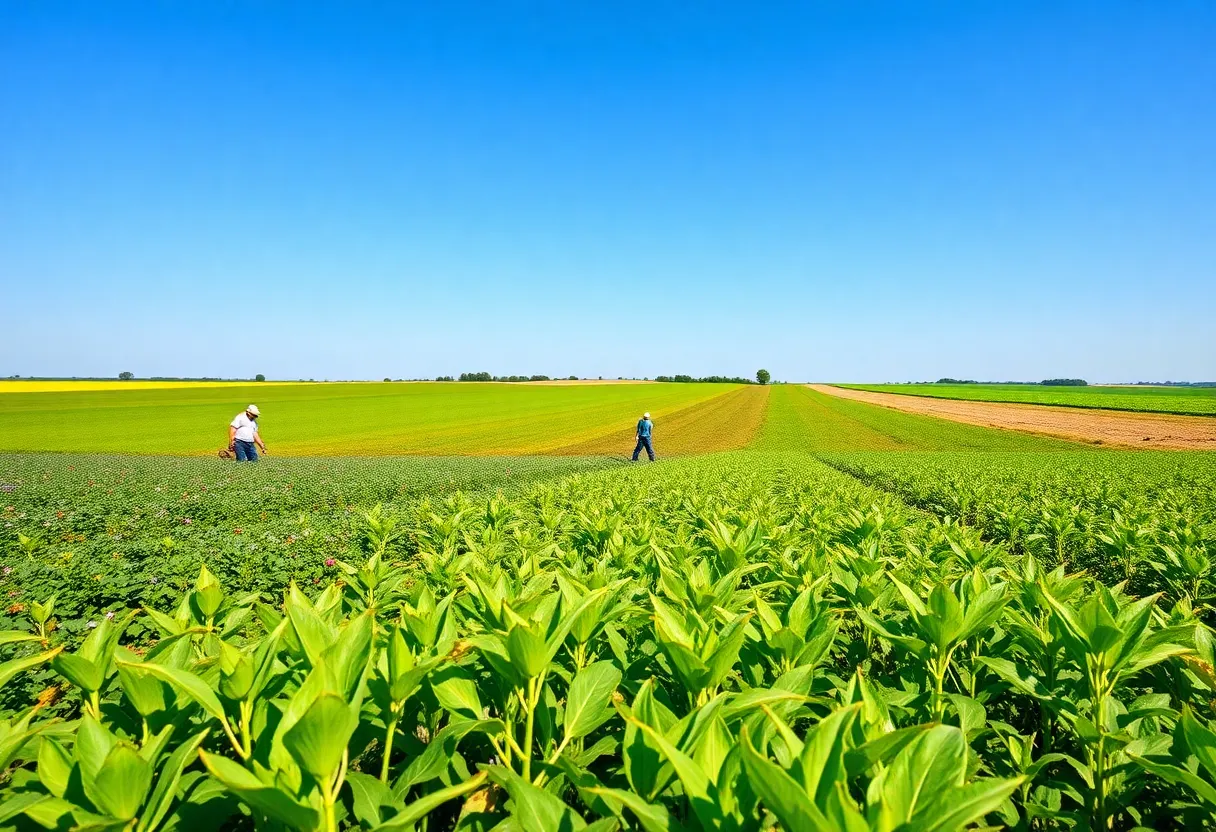
Washington, D.C., December 9, 2025
President Trump has unveiled a $12 billion aid package to assist U.S. farmers suffering due to the ongoing trade war with China. This financial support includes $11 billion for row-crop farmers and $1 billion for specialty crop producers. With eligibility criteria set to ensure fair distribution of funds, the initiative targets the relief of financial stresses from rising production costs and declining sales, particularly in the soybean and sorghum markets. While welcomed by farmers, concerns over the package’s sustainability and long-term effectiveness remain.
$12 Billion Aid Package Aims to Support U.S. Farmers
How President Trump’s Initiative Addresses Trade War Challenges
Washington, D.C. – President Donald Trump has announced a $12 billion aid package aimed at supporting U.S. farmers affected by the ongoing trade war with China. This significant measure seeks to provide essential financial relief as the agricultural sector grapples with market volatility and diminished demand for key crops.
The aid package is composed of $11 billion in direct payments to row-crop farmers and $1 billion designated for specialty crop producers. These funds are intended to alleviate the financial stress stemming from increasing production costs and declining sales, particularly in the soybean and sorghum markets, which have seen substantial drops due to reduced demand from China.
Understanding the Aid Package’s Structure
Qualifying for this assistance requires farms to have annual earnings below $900,000, while payment caps are set at $155,000 per farm. This approach aims to rectify earlier criticisms that financial aid disproportionately favored larger agricultural operations, thus enhancing equity within the farming community.
The Impact of China on U.S. Agriculture
China has historically been the largest importer of U.S. soybeans, with commitments to purchase at least 12 million metric tons by the end of the year and additional quantities in subsequent years. However, actual purchases have not met expectations, raising questions about the long-term viability of trade agreements and the underlying dynamics affecting the agricultural sector.
Filtered Support Through Ethical Measures
In a related context, Treasury Secretary Scott Bessent has divested from investments in North Dakota soybean farmland to address government ethics concerns, reflecting the administration’s commitment to maintaining transparency and minimizing perceived conflicts of interest. Additionally, President Trump has indicated plans to ease environmental regulations on farm equipment manufacturers such as John Deere, aiming to further reduce production costs for farmers.
Concerns and Long-Term Solutions
While farmers have generally welcomed this financial support, skepticism remains regarding the package’s sustainability and ability to provide long-term solutions for systemic issues, including rising costs and unpredictable markets. Critics suggest that while temporary relief can be beneficial, deeper reforms are needed to stabilize the agricultural economy.
Key Takeaways for the Agricultural Sector
The administration’s ongoing initiatives represent a recognition of the economic hurdles faced by farmers due to trade tensions and market disruptions. As Texas entrepreneurs and local communities continue to innovate, the need for effective policies to ensure sustainable growth within the Dallas County economy will be more critical than ever.
Conclusion
With the introduction of the $12 billion aid package, U.S. farmers are being provided with much-needed resources to navigate the current economic landscape. As residents of Dallas and surrounding areas, supporting local farmers and businesses will be essential as we collectively face ongoing challenges. Encouraging active engagement in our local economy is a step toward resilience and growth amid uncertainty.
Frequently Asked Questions (FAQ)
What is the $12 billion aid package announced by President Trump?
The $12 billion aid package comprises $11 billion in direct payments to row-crop farmers and $1 billion allocated for specialty crop producers. These funds aim to alleviate financial pressures resulting from increased production costs and reduced sales, particularly for soybeans and sorghum, which have been significantly impacted by decreased Chinese demand.
Who is eligible for the aid package?
To qualify for assistance, farms must have annual earnings below $900,000, with payment caps set at $155,000 per farm. This approach seeks to address previous criticisms that aid disproportionately benefited larger farms.
How has China responded to the U.S. aid package?
China, traditionally the largest importer of U.S. soybeans, had pledged to purchase at least 12 million metric tons by the end of the year, with plans for additional purchases in the following years. However, actual purchases have been slower than anticipated, prompting further scrutiny of the trade dynamics and their impact on the agricultural sector.
What other measures are being taken to support farmers?
In related developments, Treasury Secretary Scott Bessent divested his investment in North Dakota soybean farmland to comply with government ethics agreements, amid public concern over potential conflicts of interest. Additionally, President Trump announced plans to ease environmental regulations on farm equipment manufacturers, such as John Deere, to reduce production costs for farmers.
What are the concerns regarding the aid package?
While many farmers have expressed gratitude for the support, concerns persist about the sustainability of such measures and the need for long-term solutions to market volatility and rising costs. Critics argue that government aid does not address the fundamental issues of soaring costs and uncertain markets for crops.
Key Features of the Aid Package
| Feature | Description |
|---|---|
| Total Aid Amount | $12 billion |
| Direct Payments to Row-Crop Farmers | $11 billion |
| Allocation for Specialty Crop Producers | $1 billion |
| Eligibility Criteria | Farms with annual earnings below $900,000; payment caps at $155,000 per farm |
| Purpose | Alleviate financial pressures from increased production costs and reduced sales, particularly for soybeans and sorghum |
| Source of Funding | Tariff revenue |
| Additional Measures | Easing environmental regulations on farm equipment manufacturers to reduce production costs |
Deeper Dive: News & Info About This Topic
HERE Resources
Dallas Prepares for a Thrilling Halloween Season
Dallas All Star Chef Classic to Support Homeless Recovery