

Texas, December 6, 2025
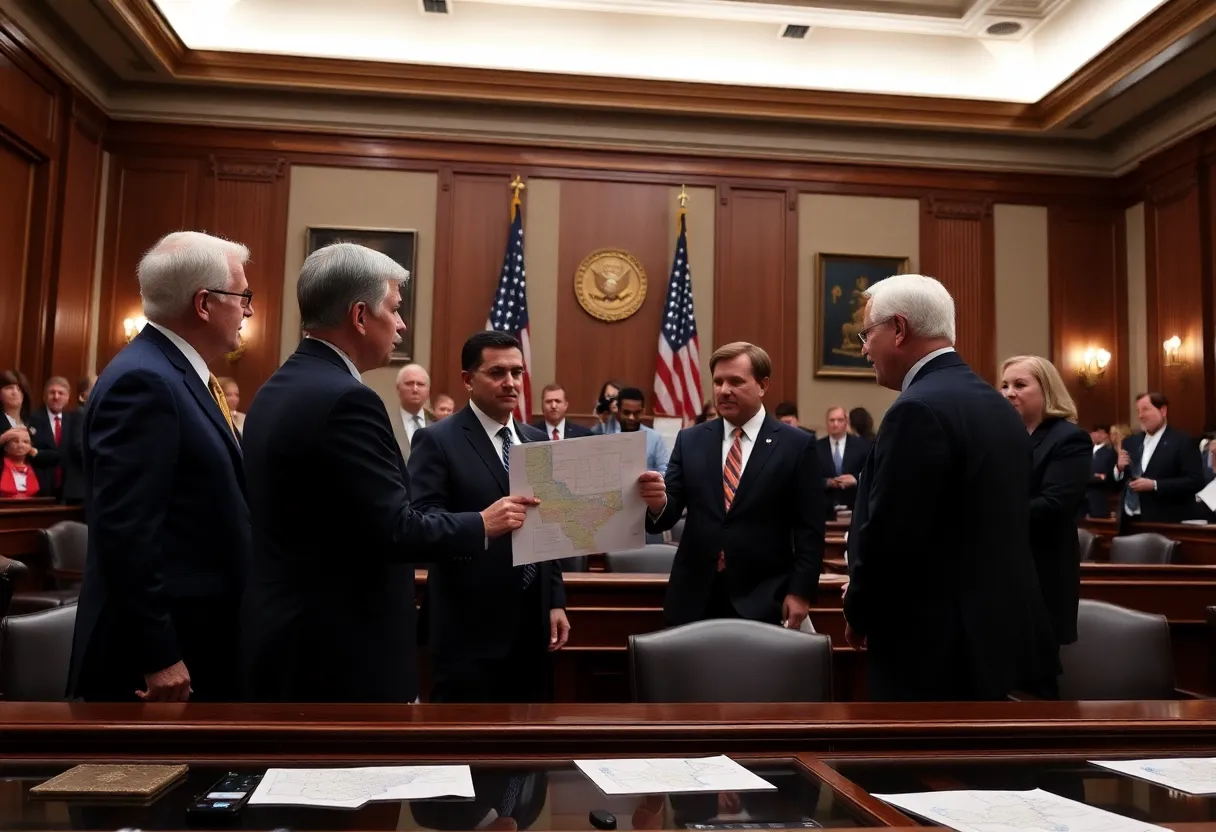
The U.S. Supreme Court has permitted Texas to proceed with redrawn congressional maps, potentially adding five Republican-leaning seats for the 2026 elections. The 6-3 ruling overturned a lower court’s decision that had raised concerns over racial gerrymandering. Critics argue that these maps dilute the voting power of minority communities, igniting a national debate over redistricting practices. The decision signifies a potential shift in the balance of power in the U.S. House and has sparked mixed reactions among Texas constituents regarding fairness and representation.
Washington, D.C.
The U.S. Supreme Court has approved Texas’s redrawn congressional maps, allowing the state to proceed with elections under these new districts in 2026. This decision is expected to add up to five Republican-leaning seats to the state’s congressional delegation, potentially shifting the balance of power in the U.S. House of Representatives.
The Supreme Court’s 6-3 ruling on December 4, 2025, overturned a lower court’s decision that had blocked the new maps, citing concerns over racial gerrymandering. The majority opinion emphasized that the lower court had “improperly inserted itself into an active primary campaign,” causing confusion and upsetting the federal-state balance in elections. The Court also noted that the district court had “failed to honor the presumption of legislative good faith” in its findings.
In contrast, the dissenting opinion, written by Justice Elena Kagan and joined by Justices Sonia Sotomayor and Ketanji Brown Jackson, argued that the majority’s decision disregarded the lower court’s thorough examination of the evidence. Justice Kagan expressed concern that the ruling would place many Texas citizens in electoral districts based on their race, violating constitutional principles.
The redistricting plan, initiated by former President Donald Trump and approved by the Republican-led Texas legislature and Governor Greg Abbott, redraws the state’s congressional boundaries to favor Republican candidates. Critics argue that the new map dilutes the political power of Black and Latino voters, potentially violating the Voting Rights Act.
This decision is part of a broader national debate over redistricting practices. Similar efforts in other states, such as North Carolina and Missouri, have also faced legal challenges. The Supreme Court’s ruling in the Texas case is likely to influence future redistricting battles across the country.
Understanding the Supreme Court’s Ruling
The Supreme Court’s decision serves as a significant moment in the ongoing discourse regarding redistricting, an issue that often impacts electoral representation and can sway political power within various states. As Texas continues to grow economically and demographically, the implications of such legislative moves can have far-reaching consequences on local governance and business opportunities.
Political Implications for Texas
According to political analysts, gaining up to five Republican-leaning congressional seats could empower the Texas GOP, enhancing their leverage in legislative decision-making at the federal level. This change might enable more favorable policies for Texas businesses, including potentially lower regulations that often benefit the local economy, allowing entrepreneurs and small business owners in Dallas to thrive.
Community Response
Local reactions have been mixed, with some constituents applauding the potential for increased Republican representation while others express concerns about fairness and inclusivity in electoral politics. This ongoing debate is crucial for all Texans, especially small business owners who require a representative voice in government to champion their interests and drive economic growth.
Broader Context of Redistricting Nationwide
This Supreme Court ruling does not exist in a vacuum; it reflects a nationwide trend of redistricting battles that can influence political climates in various states. Observers note that the implications of the Texas decision will likely serve as a precedent for similar cases elsewhere, making it imperative for entrepreneurs and business leaders to stay informed about these developments, as they could shape the legislative landscape impacting their operations.
Conclusion
The Supreme Court’s ruling on Texas’s congressional redistricting marks a pivotal moment that could influence the political balance and economic landscape not just in Texas but potentially across the nation. As residents and business owners navigate this changing environment, staying engaged and informed about local electoral processes is crucial to fostering a thriving Dallas County economy. Local support for small businesses will remain essential as entrepreneurs continue working toward growth and innovation in the face of these changes.
Frequently Asked Questions (FAQ)
What did the Supreme Court decide regarding Texas’s congressional maps?
The Supreme Court approved Texas’s redrawn congressional maps, allowing the state to use them in the 2026 elections. This decision is expected to add up to five Republican-leaning seats to Texas’s congressional delegation.
What was the basis for the Supreme Court’s decision?
The Court’s majority opinion stated that the lower court had “improperly inserted itself into an active primary campaign,” causing confusion and upsetting the federal-state balance in elections. The Court also noted that the district court had “failed to honor the presumption of legislative good faith” in its findings.
What were the concerns raised by the dissenting justices?
Justice Elena Kagan, writing for the dissenting justices, argued that the majority’s decision disregarded the lower court’s thorough examination of the evidence. She expressed concern that the ruling would place many Texas citizens in electoral districts based on their race, violating constitutional principles.
How does this decision fit into the broader context of redistricting in the U.S.?
This decision is part of a broader national debate over redistricting practices. Similar efforts in other states, such as North Carolina and Missouri, have also faced legal challenges. The Supreme Court’s ruling in the Texas case is likely to influence future redistricting battles across the country.
Key Features of the Texas Redistricting Decision
| Feature | Description |
|---|---|
| Decision Date | December 4, 2025 |
| Supreme Court Vote | 6-3 in favor of approving the new maps |
| Expected Impact | Potential addition of up to five Republican-leaning seats to Texas’s congressional delegation |
| Legal Background | Overturned a lower court’s decision that had blocked the new maps due to concerns over racial gerrymandering |
| Political Context | Part of a broader national debate over redistricting practices and their impact on electoral outcomes |
Deeper Dive: News & Info About This Topic
HERE Resources
Austin’s Quorum Break: Legal Clash in Texas Politics
Plan for Major Road Closures This Weekend in Dallas-Fort Worth
Texas Congressional Map Redistricting Approved by Supreme Court
Dallas County Officials Refute Claims of Paper Ballot System
Supreme Court to Decide on Texas’ Congressional Map for Elections
Special Election for Frisco City Council Place 1 Announced
Dallas-Fort Worth Winter Weather Forecast: Prepare for Cold and Wet Conditions
Governor Cracks Down on Hemp-Derived THC Products in Texas
Michelin-Starred Taqueria Ends Dallas Pop-Up
Man Dies in Police Standoff in Van Alstyne