

Dallas, TX, December 17, 2025
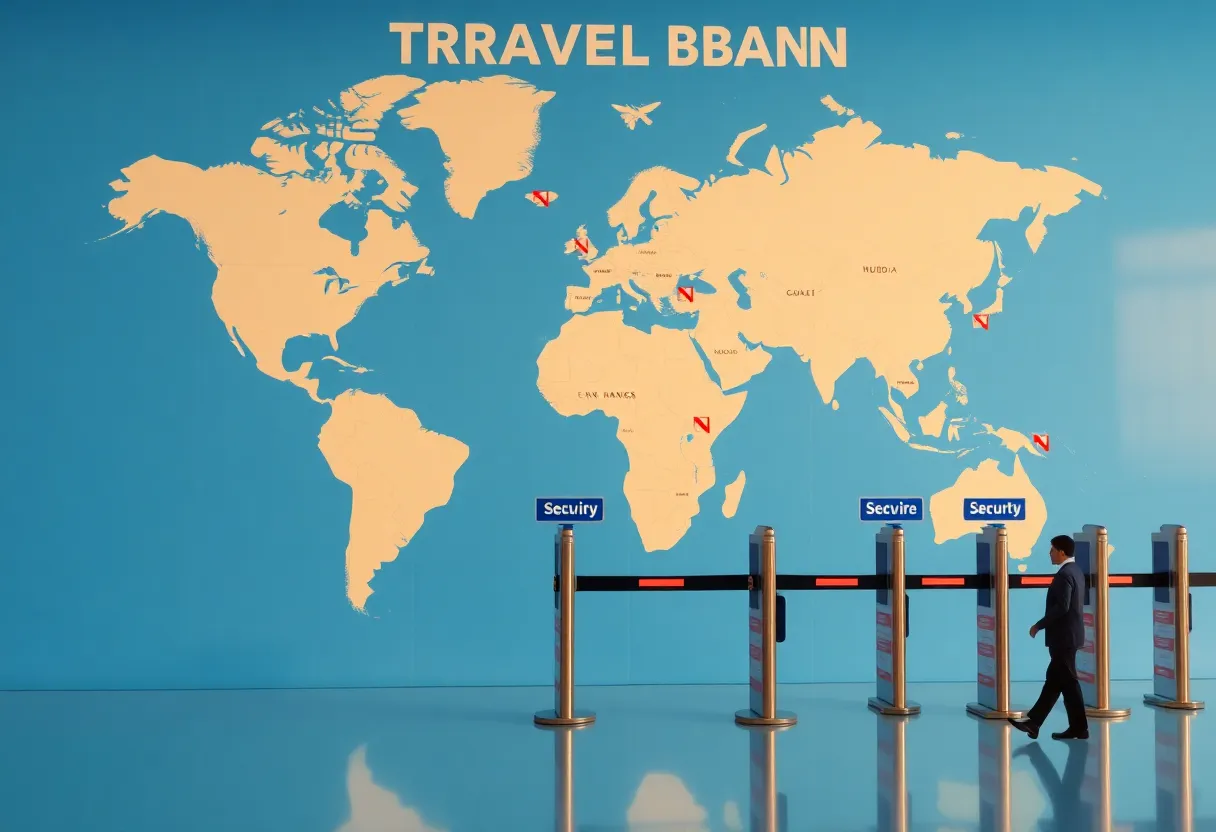
President Donald Trump has expanded the U.S. travel ban to include 20 additional countries, particularly affecting those with Palestinian Authority-issued travel documents. The full ban spans five countries, while partial restrictions affect 15 others. The new regulations, intended to enhance national security, will take effect on January 1, 2026. Critics argue that the policy discriminates based on nationality and lacks necessary exemptions for Afghan allies. This expansion builds on previous travel limitations and emphasizes the ongoing concerns over vetting and security from certain nations.
Dallas, TX – Expanded Travel Ban Affects Business and Immigration
President Donald Trump has expanded the U.S. travel ban to include 20 additional countries and individuals holding Palestinian Authority-issued travel documents, set to take effect on January 1, 2026. This significant move aims to bolster national security by addressing concerns related to security screening deficiencies and information sharing among these nations.
Details of the Expansion
The new restrictions impose a full travel ban on five countries: Syria, Burkina Faso, Mali, Niger, and South Sudan. Additionally, individuals traveling on documents issued by the Palestinian Authority are now subjected to this ban. With these new additions, the total number of nations under U.S. travel and immigration restrictions has now doubled to 39.
Partial travel restrictions have been placed on 15 additional countries, including Angola, Antigua and Barbuda, Benin, Ivory Coast, Dominica, Gabon, Gambia, Malawi, Mauritania, Nigeria, Senegal, Tanzania, Tonga, Zambia, and Zimbabwe. These partial restrictions will affect visitors and immigrants hailing from these nations.
Exemptions and Implementation
Exemptions to the travel ban will remain in effect for individuals holding valid visas, lawful permanent residents of the U.S., diplomats, athletes, and individuals whose entry into the U.S. is deemed to serve American interests. The new restrictions are slated to take effect on January 1, 2026.
Rationale Behind the Decision
The administration has cited a variety of factors for the expansion, including widespread corruption, unreliable civil documentation, and high visa overstay rates within the affected countries. These challenges complicate the vetting processes for individuals wishing to enter the U.S. and raise valid concerns over national security and public safety.
Reactions and Criticisms
The expansion of the travel ban has not been without controversy, as legal and human rights groups have criticized the policy, arguing that it unfairly targets citizens based on nationality rather than tangible security threats. Advocacy groups have also voiced concerns regarding the absence of exceptions for Afghan allies who qualify for Special Immigrant Visas. Notably, the inclusion of Palestinian Authority passport holders represents a substantial escalation, with the administration emphasizing terrorist activity and compromised vetting capabilities in the West Bank and Gaza.
Background Context
This expansion follows a previous proclamation in June 2025, which limited entry from 19 countries for similar reasons. The Trump administration has consistently emphasized stringent vetting procedures as a means to enhance national security, resulting in a sequence of travel bans and restrictions since the onset of the current administration.
Frequently Asked Questions (FAQ)
What countries are now subject to the full travel ban?
The full travel ban now includes Syria, Burkina Faso, Mali, Niger, and South Sudan, as well as individuals traveling on documents issued by the Palestinian Authority.
Which countries face partial travel restrictions?
Partial travel restrictions have been applied to Angola, Antigua and Barbuda, Benin, Ivory Coast, Dominica, Gabon, Gambia, Malawi, Mauritania, Nigeria, Senegal, Tanzania, Tonga, Zambia, and Zimbabwe.
Who is exempt from the travel ban?
Exemptions include individuals with valid visas, lawful permanent residents of the U.S., diplomats, athletes, and those whose entry serves U.S. interests.
When do the new restrictions take effect?
The new travel restrictions are set to take effect on January 1, 2026.
What are the reasons for expanding the travel ban?
The administration cited widespread corruption, fraudulent or unreliable civil documents, and high rates of visa overstays in the affected countries as factors complicating the vetting process and raising national security concerns.
How have human rights groups responded to the expansion?
Legal and human rights groups have criticized the expansion, arguing that it unfairly targets citizens based on nationality rather than legitimate security threats and lacks exceptions for Afghan allies eligible for Special Immigrant Visas.
Key Features of the Travel Ban Expansion
| Feature | Details |
|---|---|
| Full Travel Ban Countries | Syria, Burkina Faso, Mali, Niger, South Sudan, and individuals with Palestinian Authority-issued travel documents |
| Partial Travel Restrictions Countries | Angola, Antigua and Barbuda, Benin, Ivory Coast, Dominica, Gabon, Gambia, Malawi, Mauritania, Nigeria, Senegal, Tanzania, Tonga, Zambia, and Zimbabwe |
| Exemptions | Individuals with valid visas, lawful permanent residents, diplomats, athletes, and those whose entry serves U.S. interests |
| Effective Date | January 1, 2026 |
| Rationale | Concerns over widespread corruption, fraudulent documents, and high visa overstay rates complicating the vetting process |
| Criticisms | Legal and human rights groups argue the policy unfairly targets citizens based on nationality and lacks exceptions for Afghan allies eligible for Special Immigrant Visas |
Deeper Dive: News & Info About This Topic
HERE Resources
Urban Egg Breakfast Spot Opens in Plano, Texas
American Airlines Expands Operations at Chicago O’Hare
G6 Hospitality Launches Nationwide Safety Program in Dallas
North Texas Transportation Planner Calls for Balanced Mobility
Dallas-Fort Worth and Houston Identify Texas’ Most Congested Roads
Omni Hotels Unveils Holiday Cocktail Experience Across 27 Locations
Clubs to Hire Reports Significant Booking Growth for Golf in 2025
Discover the Charms of Grapevine, Texas
Dallas-Fort Worth Weekend Events Highlight Concerts and Sports
Nancy Dedman, Renowned Philanthropist, Passes Away