

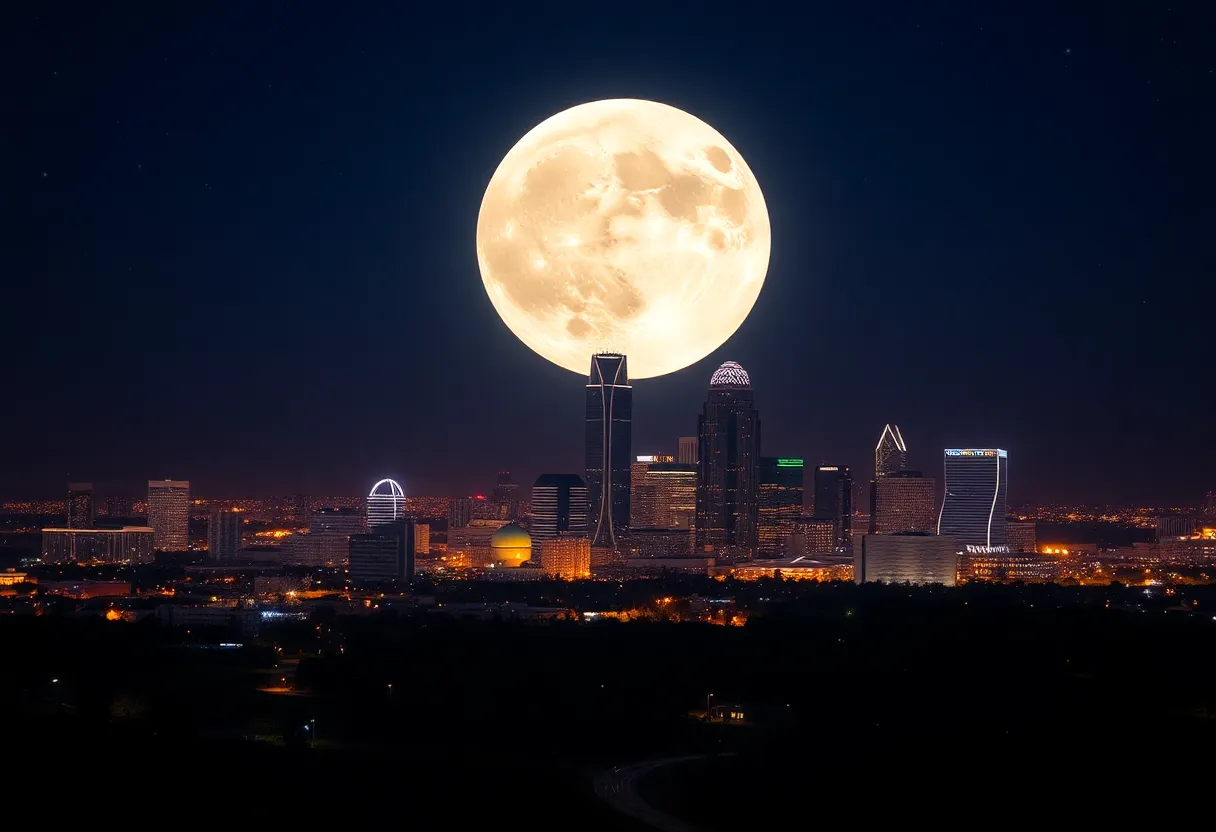
Dallas, TX, January 3, 2026
On January 3, 2026, Dallas residents enjoyed a spectacular view of the Wolf Supermoon, which appeared 14% larger and 30% brighter. Favorable weather conditions allowed for clear visibility, while the event coincided with the peak of the Quadrantid meteor shower. This celestial phenomena not only delighted astronomers and stargazers but also inspired reflections on community resilience and connection to nature.
Dallas, TX: Wolf Supermoon Illuminates Night Sky
On Saturday, January 3, 2026, Dallas residents witnessed the first full moon of the year, known as the “Wolf Moon.” This celestial event coincided with a supermoon, making the moon appear approximately 14% larger and 30% brighter than usual.
As local entrepreneurs thrive on innovation and determination, the clear night sky offered a stunning backdrop for this astronomical phenomenon. The Wolf Supermoon not only resonated with stargazers but also heralded an opportunity for the community to reflect on growth and resilience.
Optimal Viewing Times
The Wolf Supermoon reached its fullest phase at 5:03 a.m. EST on January 3. However, it was visible throughout the night, with the best viewing opportunities during moonrise and moonset. In Dallas, the moon rose in the east shortly after sunset on January 2 and set in the west around sunrise on January 3. Clear skies provided excellent visibility for observers.
Weather Conditions
The weather in Dallas on January 3 was favorable for skywatching. The forecast predicted mostly clear skies with temperatures ranging from a low of 42°F (5°C) to a high of 64°F (18°C). These conditions allowed for unobstructed views of the supermoon, showing the resilience of nature’s beauty amidst urban life.
Additional Celestial Events
The Wolf Supermoon coincided with the peak of the Quadrantid meteor shower, which occurred from January 2 to 3. While the brightness of the full moon may have obscured some meteors, the brightest fireballs were still visible to the naked eye. This event highlights the interconnectedness of natural phenomena, inspiring awe and community engagement.
Understanding the Wolf Moon
The term “Wolf Moon” originates from Native American and European traditions, referring to the time when wolves were most active during midwinter. This name has been adopted to describe the first full moon of the year, reminding individuals of our connection to nature and the importance of observing such events together as a community.
Looking Ahead
The next full moon, known as the Snow Moon, is scheduled for February 1, 2026. Skywatchers can look forward to observing this event, along with other celestial phenomena, in the coming months, reinforcing the notion that every clear sky brings potential opportunities for inspiration and exploration.
Key Features of the Wolf Supermoon
| Feature | Details |
|---|---|
| Event | Wolf Supermoon |
| Date | January 3, 2026 |
| Peak Fullness | 5:03 a.m. EST |
| Visibility | Throughout the night of January 2–3 |
| Weather Conditions | Clear skies, temperatures between 42°F (5°C) and 64°F (18°C) |
| Additional Event | Peak of the Quadrantid meteor shower |
| Next Full Moon | Snow Moon on February 1, 2026 |
Frequently Asked Questions (FAQ)
When was the Wolf Supermoon visible in Dallas?
The Wolf Supermoon was visible throughout the night of January 2–3, 2026, with optimal viewing during moonrise and moonset.
What is a supermoon?
A supermoon occurs when the full moon coincides closely with perigee, the nearest point in its orbit to Earth, making it appear larger and brighter than usual.
What is the origin of the name “Wolf Moon”?
The name “Wolf Moon” originates from Native American and European traditions, referring to the time when wolves were most active during midwinter.
What other celestial events coincided with the Wolf Supermoon?
The Wolf Supermoon coincided with the peak of the Quadrantid meteor shower, which occurred from January 2 to 3, 2026.
When is the next full moon after the Wolf Supermoon?
The next full moon is the Snow Moon, scheduled for February 1, 2026.
Deeper Dive: News & Info About This Topic
HERE Resources