

Dallas, Texas, February 9, 2026
Dallas is witnessing a transformation in sports arena design, led by Dan Noble of HKS, focusing on multifunctional spaces. As cities invest in new arenas, concerns about taxpayer funding and economic benefits arise. Studies indicate public subsidies often yield limited returns, necessitating a balance between entertainment value and fiscal responsibility. As Dallas plans future projects, prioritizing community development and financial prudence is essential for economic resilience.
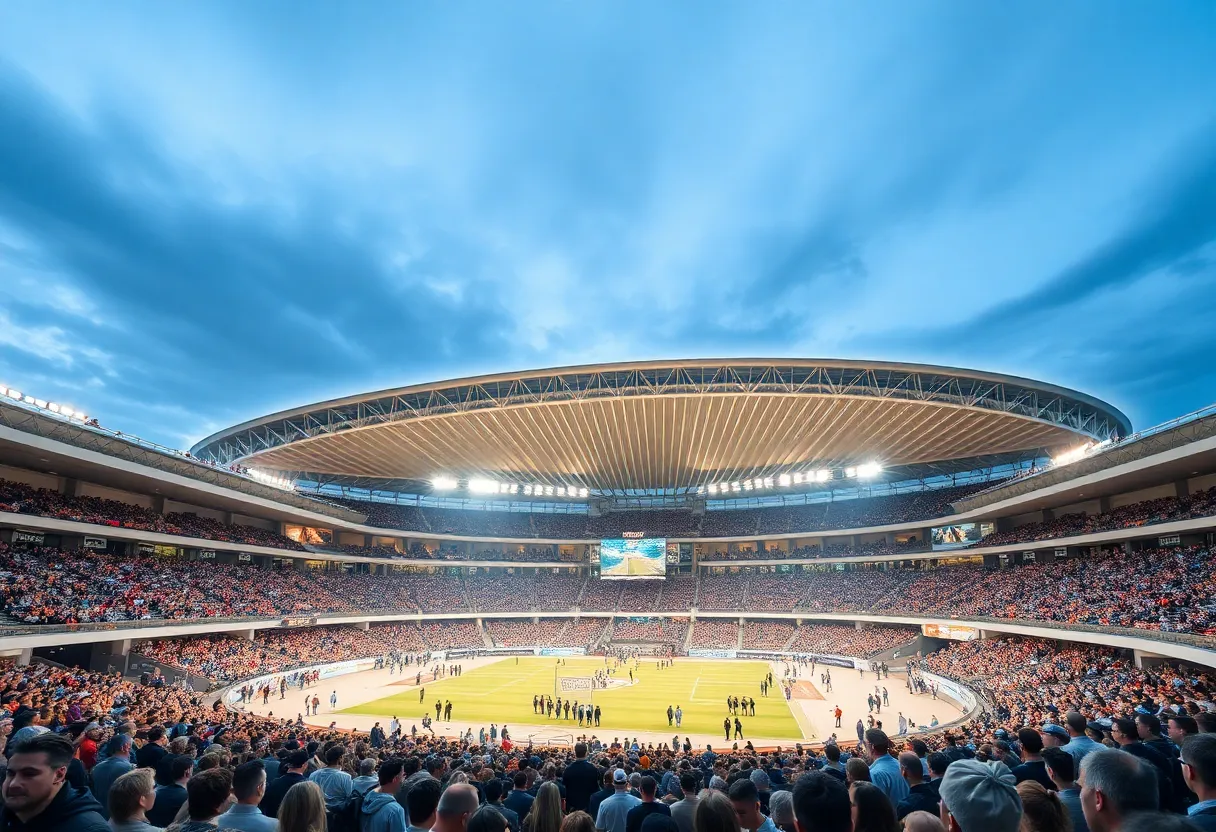
Dallas, Texas – The world of sports arena construction and renovation has become a distinctive blend of business, entertainment, and design. As cities continually seek to enhance their cultural landscapes, sports venues have evolved into multifunctional spaces that cater not only to sports fans but also to a broader audience looking for leisure and entertainment options. Key to this transformation is Dan Noble, the CEO of HKS, a Dallas-based architecture firm known for its innovative and high-profile stadium designs, including AT&T Stadium in Arlington and SoFi Stadium in Los Angeles.
These modern stadiums are not merely impressive in aesthetics; they represent significant economic ventures. The growth of the sports industry has fostered an environment where media rights and live event revenues contribute billions to the economy. Investors recognize the potential of these venues, seeing them as versatile “adult playgrounds” capable of hosting concerts, conferences, and a variety of events that extend beyond traditional sporting activities. This intention to maximize profitability is reshaping the way communities engage with these state-of-the-art facilities.
However, the funding of sports arenas often ignites concerns among taxpayers. Numerous studies have shown that public subsidies for stadium construction frequently fall short of delivering the anticipated economic benefits. According to a report from the Tax Foundation, the financial advantages are typically restricted to the area immediately surrounding the stadium, failing to extend into the broader community. This raises questions about the efficacy of taxpayer dollars being funneled into such initiatives without clear evidence of widespread economic growth.
Economists have consistently debated the merits of stadium subsidies, with research revealing that these investments do not yield significant returns for local economies. A notable study conducted by Stanford economist Roger Noll articulated that sports stadiums generally fail to generate substantial economic benefits beyond their immediate vicinity. The evidence suggests that taxpayer-financed stadiums may not provide the promised economic uplift for cities, which places an essential spotlight on fiscal responsibility in public funding decisions.
As cities like Dallas contemplate the construction of new arenas or the renovation of existing facilities, it is vital to evaluate both the aesthetic allure and entertainment value of these structures against the financial implications for taxpayers. Ensuring municipally backed initiatives align with community development and prioritize fiscal prudence is crucial in navigating these complex considerations.
The challenge moving forward lies in finding a balance between creating breathtaking entertainment hubs and serving the best interest of the public. By embracing the positive aspects of local entrepreneurship and innovation while also considering the economic implications of public investments, Dallas can pave the way towards a prosperous future that enhances both its cultural identity and economic resilience.
FAQ Section
- What is the role of Dan Noble in sports arena design?
- Dan Noble, CEO of Dallas-based HKS, has been instrumental in designing several prominent stadiums, including AT&T Stadium in Arlington, SoFi Stadium in Los Angeles, and U.S. Bank Stadium in Minneapolis.
- How have sports arenas evolved in terms of revenue generation?
- Sports arenas have transformed into multi-use “adult playgrounds” that host concerts, conferences, and other events to maximize profitability, in addition to traditional sporting events.
- What concerns exist regarding taxpayer funding for sports arenas?
- Studies indicate that public subsidies for stadium construction and renovation frequently fail to deliver the promised economic benefits, with advantages often limited to the immediate vicinity of the stadium and not extending to the broader community.
- What do economists say about the economic impact of stadium subsidies?
- Research consistently shows that stadium subsidies do not lead to significant local economic growth. For instance, a 2015 study by Stanford economist Roger Noll concluded that sports stadiums do not generate substantial economic benefits for the local economy.
- What should cities consider when planning new sports arenas?
- As cities like Dallas consider building new arenas or renovating existing ones, it is crucial to weigh the aesthetic and entertainment value of these structures against the financial burden they may impose on taxpayers, ensuring fiscal responsibility and equitable community development.
| Key Feature | Details |
|---|---|
| Architectural Influence | Dan Noble, CEO of Dallas-based HKS, has designed several prominent stadiums, including AT&T Stadium in Arlington, SoFi Stadium in Los Angeles, and U.S. Bank Stadium in Minneapolis. |
| Revenue Generation | Sports arenas have evolved into multi-use “adult playgrounds” that host concerts, conferences, and other events to maximize profitability, in addition to traditional sporting events. |
| Taxpayer Concerns | Studies indicate that public subsidies for stadium construction and renovation frequently fail to deliver the promised economic benefits, with advantages often limited to the immediate vicinity of the stadium and not extending to the broader community. |
| Economic Impact | Research consistently shows that stadium subsidies do not lead to significant local economic growth. For instance, a 2015 study by Stanford economist Roger Noll concluded that sports stadiums do not generate substantial economic benefits for the local economy. |
| Considerations for Cities | As cities like Dallas consider building new arenas or renovating existing ones, it is crucial to weigh the aesthetic and entertainment value of these structures against the financial burden they may impose on taxpayers, ensuring fiscal responsibility and equitable community development. |
Deeper Dive: News & Info About This Topic
HERE Resources
Fort Worth Hosts a Series of Major Events in June
Dallas Stars Consider Relocation to Plano for Financial Growth
Dallas Unveils Memorial Auditorium Arena for the Dallas Wings
Dallas City Council Backs $23.5 Million Mixed-Use Development Project
Dallas Pulse Volleyball Team Rebrands and Expands in North Texas
Dallas Mavericks Prepare for December Basketball Season
Dallas Stars Exploring New Arena Options