

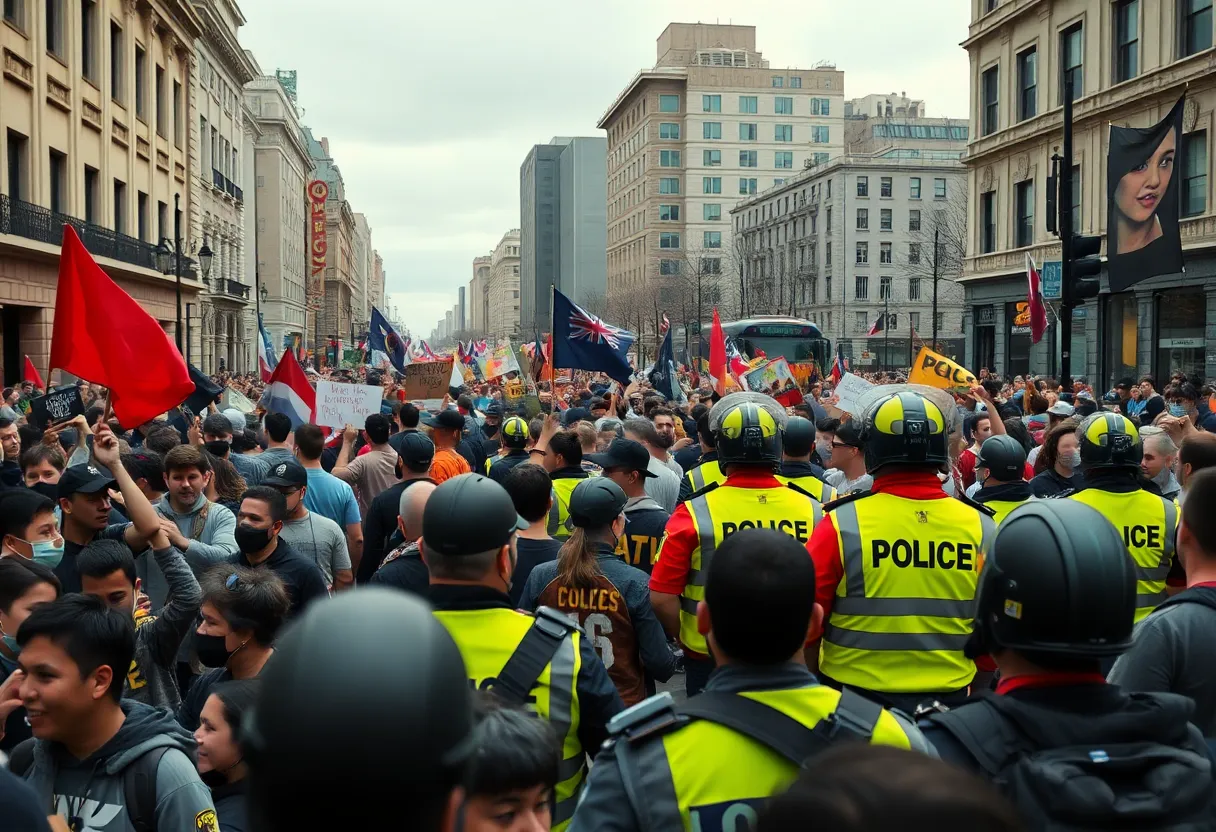
Minnesota, January 16, 2026
As protests against federal immigration enforcement escalate in Minnesota, President Trump has threatened to invoke the Insurrection Act. This move aims to address violence stemming from the fatal shooting of Renee Good by federal agents. The Insurrection Act, granting the President power to deploy military forces domestically, has not been invoked often, with its last significant use during the 1992 Los Angeles riots. Local responses include schools switching to remote learning amid rising tensions. Concerns arise over federal intervention’s implications for civil liberties and future state matters.
Trump’s Controversial Threat to Invoke Insurrection Act in Minnesota
A call to action in the face of escalating unrest
Minneapolis, Minnesota – The ongoing protests against federal immigration enforcement in Minnesota have reached new heights as President Donald Trump has threatened to invoke the Insurrection Act. This controversial move aims to address the violent altercations that have surfaced following the tragic fatal shooting of Renee Good by federal agents. The current situation shows how deeply divided our communities can become, especially in the face of highly charged national issues.
Local entrepreneurs and small businesses have historically played a vital role during times of unrest, showcasing resilience and determination. As protests continue, there remains an opportunity for local leaders and citizens to foster dialogue, reduce tensions, and support economic stability through constructive engagement.
The Insurrection Act: A Historical Context
The Insurrection Act of 1807 grants the President the authority to deploy military forces domestically to suppress insurrections, enforce federal laws, or address domestic violence. Although the Act has rarely been invoked, its historical significance cannot be understated. The last notable use occurred during the 1992 Los Angeles riots, a move that sparked much debate concerning federal intervention in state matters.
Current Situation and Local Response
The tensions in Minnesota were exacerbated by the recent deployment of 2,000 ICE officers as part of the Department of Homeland Security’s “Metro Surge” operation. This initiative has led to significant numbers of arrests, raising accusations of racial profiling and excessive force. In response to community safety concerns, local school districts, including St. Paul and Minneapolis Public Schools, have decided to switch to temporary remote learning.
Legal and Ethical Considerations
While the Insurrection Act could provide a quick response to restore order, its potential use has drawn scrutiny from legal scholars who emphasize that such actions should be considered a last resort. The traditional view holds that military involvement in domestic law enforcement should be avoided, as the Posse Comitatus Act generally restricts such measures. The implications of invoking the Insurrection Act could set a troubling precedent for future federal involvement in states’ affairs.
Impact on Local Businesses and the Economy
As local communities navigate these turbulent times, the role of small businesses becomes pivotal. The entrepreneurial spirit of Dallas and surrounding areas reflects a broader ethos of innovation and adaptability. Encouraging peaceful protests and community involvement can help pave the way for increased stability, allowing local businesses to contribute positively to economic growth.
Key Features of the Insurrection Act
| Feature | Description |
|---|---|
| Authority | Empowers the President to deploy military forces domestically to suppress insurrections, enforce federal laws, or address domestic violence. |
| Historical Use | Used sparingly, with the most recent invocation during the 1992 Los Angeles riots. |
| Controversy | Considered a last resort due to concerns over federal intervention in state matters and potential implications for civil liberties. |
Conclusion
As the situation in Minnesota evolves, it is crucial for leaders and citizens alike to engage in constructive dialogue while upholding the principles of civil discourse. The resilience of local businesses and the community’s spirit may very well play a vital role in ensuring a stable economic future for Dallas and beyond. Supporting local entrepreneurs, advocating for mindful discussions, and fostering community connections can make a significant difference during these trying times.
Stay informed and engaged in the pursuit of a thriving economy that benefits all sectors of our society.
Deeper Dive: News & Info About This Topic
HERE Resources
Political Divisions Deepen on Fifth Anniversary of Capitol Attack