

Dallas, TX, December 5, 2025
The U.S. Supreme Court has approved Texas’s contentious congressional map, permitting a redistricting plan expected to favor Republican candidates for the upcoming elections. This crucial decision overrules a lower court’s concerns about potential racial gerrymandering. The ruling takes place just as Texas prepares for its midterm elections, with implications that extend beyond the state and into national politics. The decision highlights ongoing debates about electoral fairness and representation, especially among marginalized communities.
Texas Congressional Map Redistricting Approved by Supreme Court
The Supreme Court’s ruling allows Texas to implement a congressional map expected to benefit Republican candidates in the upcoming elections.
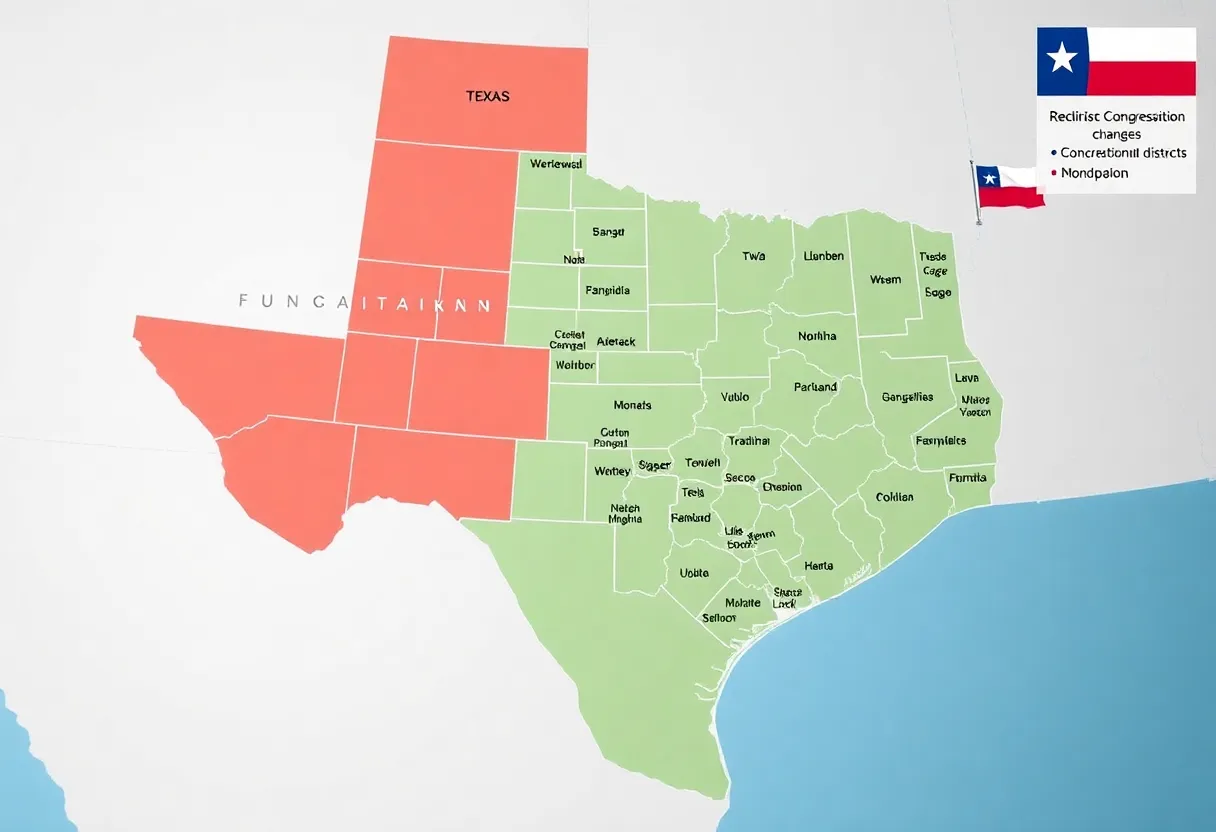
Dallas, TX – In a significant legal development, the U.S. Supreme Court has granted Texas the green light to proceed with its newly redrawn congressional map. This ruling comes as the state gears up for the 2026 midterm elections, where the map is likely to favor Republican candidates. The decision overrides an earlier ruling from a lower court which identified potential constitutional violations against racial discrimination in the map’s design.
The Supreme Court’s conservative majority took decisive action on an emergency request from Texas officials, highlighting the importance of clarity as the primary election dates approach. The Court’s unsigned order criticized the lower court for overstepping its boundaries, stating that it had improperly intervened in a politically charged situation, ultimately disrupting the balance between federal and state election regulations.
Background of the Redistricting Plan
Enacted in August 2025, Texas’s redistricting plan aims to increase Republican representation in the U.S. House of Representatives by adding five Republican-leaning districts. Supporters of the map, including Texas Republicans and Governor Greg Abbott, argue that it better reflects the political values and demographics of the state. However, opponents—comprising civil rights organizations and a number of Democratic lawmakers—assert that the map effectively constitutes racial gerrymandering. They claim it dilutes the political influence of Black and Latino voters across the state.
Judicial Dissent and Concerns
The decision faced dissent from Justices Elena Kagan, Sonia Sotomayor, and Ketanji Brown Jackson, who voiced concerns that the ruling undermines the principles of electoral fairness and racial justice. They argued that the extensive hearings and evidence presented by the lower court were unjustly dismissed in favor of expedience, potentially compromising the integrity of the electoral process in Texas.
Implications for Future Redistricting
This ruling is not just about Texas; it is part of a larger, nationwide dialogue concerning redistricting and electoral fairness. As various states grapple with their own redistricting challenges, the Supreme Court’s ruling is expected to set significant precedents for future legal battles over electoral maps and their compliance with constitutional standards.
Local Perspectives and Community Impact
The focus on redistricting and its implications extends beyond party lines, with local entrepreneurs and community leaders watching closely. Efforts to promote fair and equitable representation could ultimately foster a stronger business climate, enabling the vital innovations and growth necessary to enhance the Dallas County economy. Engaging local voices in these discussions will be crucial to ensure that all communities are adequately represented in the upcoming electoral process.
Conclusion: A Call to Action
As Texas moves forward with its congressional map, the implications will resonate beyond the state’s borders. Now more than ever, it is essential for residents and business owners in Dallas to remain engaged. Supporting local initiatives that promote fair representation will benefit the entire community and bolster the region’s economic strength. By staying informed and active, citizens can contribute to the ongoing dialogue about electoral representation and its impact on Texas’s future.
Frequently Asked Questions
What did the Supreme Court decide regarding Texas’s congressional map?
The Supreme Court allowed Texas to use its newly redrawn congressional map, which is expected to favor Republican candidates in the 2026 midterm elections. This decision overrides a lower court’s ruling that found the map likely violated constitutional protections against racial discrimination.
What was the basis of the lower court’s ruling against the map?
The lower court determined that the redistricting plan likely constituted racial gerrymandering, violating the constitutional rights of Black and Latino voters.
What was the Supreme Court’s reasoning for overturning the lower court’s decision?
The Supreme Court’s conservative majority stated that the lower court had “improperly inserted itself into an active primary campaign,” causing confusion and disrupting the federal-state balance in elections.
Who dissented in the Supreme Court’s decision?
Justices Elena Kagan, Sonia Sotomayor, and Ketanji Brown Jackson dissented, expressing concerns that the ruling undermines electoral fairness and racial justice.
How does this decision fit into the broader national redistricting debate?
This ruling is part of a nationwide debate over redistricting, with several states engaged in legal battles over electoral maps. The Supreme Court’s decision is expected to influence future redistricting efforts and legal challenges across the country.
| Key Feature | Description |
|---|---|
| Supreme Court Ruling | Approved Texas’s congressional map favoring Republicans for the 2026 elections. |
| Lower Court’s Concern | Identified potential racial gerrymandering in the redistricting plan. |
| Judicial Dissent | Expressed fears regarding electoral fairness based on disregarded evidence. |
| Implications | Expected influence on nationwide redistricting efforts and future legal challenges. |
| Community Engagement | Importance of local voices in discussions regarding fair representation. |
Deeper Dive: News & Info About This Topic
HERE Resources
AT&T Stadium Ranked Most Iconic Venue for 2026 FIFA World Cup
Supreme Court to Decide on Texas’ Congressional Map for Elections
Governor Cracks Down on Hemp-Derived THC Products in Texas
Texas Lawmakers Clash Over New Escort Protocol Amid Redistricting Fight
Arlington Completes AT&T Stadium Debt Payment Early
Dallas Faces Extreme Heat and Nightclub Closure
Texas Republicans Propose Congressional Map to Gain Seats
Texas Republicans Propose New Congressional Map Amid Controversy